If you woke up to a wet bed under your old dog this morning, take a breath. You are not alone, and your dog is not being bad. A senior dog who leaks while sleeping or has an accident overnight is almost never misbehaving. Something has changed in the body, and most of the time it is something a veterinarian can help with.
This is one of the hardest parts of loving a dog into old age, and one of the most misunderstood. Owners blame themselves, or worse, they blame the dog. Neither is fair. Nighttime accidents in older dogs are common, well understood, and, in most cases, manageable.
Here is the honest guide: how to tell what is really happening, what your vet can do about it, and how to keep your dog clean, dry, and comfortable while you sort it out.
New here? This article is part of our complete guide to big-dog potty training.
Is it incontinence, or is it house-soiling?
These two look alike on the floor, but they are different problems with different causes and different fixes. Telling them apart is the first step.
True urinary incontinence is involuntary. It usually happens while your dog is resting or asleep, and she often has no idea it is happening, you simply find a damp spot where she was lying. The bladder is leaking on its own, not because she chose to go.
House-soiling is different. Here the dog is awake, walks to a spot, and squats or postures to go, just in the wrong place. This is usually behavioral or, in older dogs, a sign of cognitive decline. It is a loss of house-training, not a leaking bladder.
Why does the difference matter? Because the fix for each is completely different, and so is the conversation with your vet. One points toward the bladder and its muscles, the other toward the brain or the daily routine. Sorting out which one you are seeing is the most useful thing you can do before that first appointment.
How to tell which one you are seeing
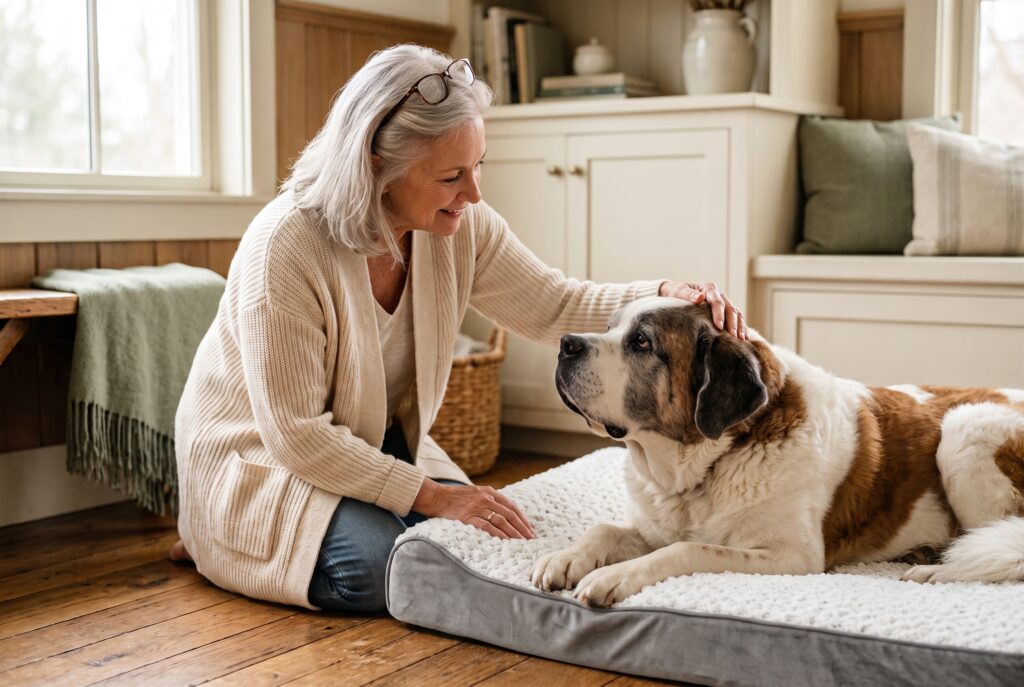
You can usually spot the difference with a few days of attention:
- When does it happen? Leaks during sleep or rest, with no awareness, point to true incontinence. Accidents while the dog is up and moving point to house-soiling.
- Does the dog posture? A dog who squats or lifts to go, even indoors, is soiling, not leaking. A dog who simply leaves a wet patch where she napped is incontinent.
- Is the dog aware? Incontinent dogs are often surprised or unbothered, they never felt it happen. A soiling dog made a decision to go, just in the wrong place.
- What else has changed? Disorientation, pacing at night, or staring at walls alongside the accidents can point to cognitive decline. Drinking a lot more than usual points toward a medical problem worth a prompt vet visit.
Jot down what you see for a few days and bring it to your veterinarian. It saves time and points the workup in the right direction.
The medical causes worth knowing about
Almost every senior nighttime accident traces back to something physical. These are the usual suspects in big, older dogs.
USMI, the most common cause of leaking
The most common reason an older dog leaks urine while resting is a condition called urethral sphincter mechanism incompetence, or USMI. The muscle that holds the bladder closed weakens and lets urine seep out, usually during sleep. It shows up most often in spayed female dogs, and the larger the dog, the higher the risk, it is most common in dogs over about 45 pounds. By some estimates it affects as many as one in five spayed females, and up to about 30 percent of large-breed dogs (VCA). None of that is the dog’s fault, and, importantly, it is treatable.
Arthritis and mobility loss
Sometimes the bladder is fine and the real problem is the trip to the door. An arthritic senior may simply not be able to get up and outside in time. For a big dog whose joints ache, the difference between making it out and having an accident can come down to a slippery floor or one too many stairs.
Cognitive decline (dog dementia)
In older dogs, house-soiling can be an early sign of canine cognitive dysfunction, the dog version of dementia. Veterinarians screen for it with a checklist called DISHAA: disorientation, changes in interactions, sleep-wake cycle disruption, house-soiling, activity changes, and anxiety. (The ASPCA describes the same idea for owners as CRASH.) If the accidents come with confusion or restless nights, say so at the vet.
Beyond these, a handful of conditions can drive sudden accidents or a jump in urination. Here is what your vet will be checking for.
What your vet checks for
- Urinary tract infection
- Frequent small trips, straining, or blood. Common in seniors and very treatable with the right antibiotic.
- Bladder stones
- Straining, blood, and repeat infections. Confirmed by imaging; some dissolve with diet, others need removal.
- Chronic kidney disease
- More drinking and more urine as the kidneys lose their grip. Managed with diet and monitoring.
- Diabetes
- A lot of water in and a lot out, often with a big appetite. Managed with vet-directed insulin.
- Cushing's disease
- Increased thirst and urination, a pot belly, panting, and a thinning coat. Diagnosed with bloodwork.
- Arthritis and mobility loss
- The bladder works; the body cannot get outside in time. Pain control and home changes help.
- Cognitive dysfunction
- Disorientation and lost house-training in a senior. Screened with the DISHAA checklist.
This is common, and it is not the dog's fault
Urinary leaking is not rare, and it is not a character flaw. By some estimates it affects as many as one in five spayed female dogs, and up to about 30 percent of large breeds (VCA). Big bodies and long lives make seniors especially prone. The dog lying in a damp bed is ashamed of nothing, she did not do a single thing wrong. What she needs is a vet visit and a dry place to rest, not a scolding.
"A wet bed is not bad behavior. It is a medical problem, and most of the time, it is one your vet can treat."
What your vet can actually do
Here is the hopeful part, and the reason the visit matters: most leaking responds to treatment. By VCA’s figures, about 70 percent of cases respond well to medication alone. This is not something you simply have to live with.
For USMI, vets usually reach for one of two approaches, sometimes together. The first is a medication that tightens the bladder sphincter (phenylpropanolamine, sold as Proin and once-daily Proin ER). The second is a low-dose estrogen-type medication for spayed females (estriol, sold as Incurin). Both are FDA-approved for exactly this purpose.
If the cause turns out to be something else, the treatment follows the cause: antibiotics for an infection, insulin for diabetes, specific medication for Cushing’s, pain control and joint support for arthritis, and a dedicated drug (selegiline, sold as Anipryl) along with diet and enrichment for cognitive decline. The principle is the same across the board, name the cause and treat the cause. Your veterinarian is the one to prescribe and monitor any of these, so bring your notes and ask.
Keeping your dog clean, dry, and comfortable
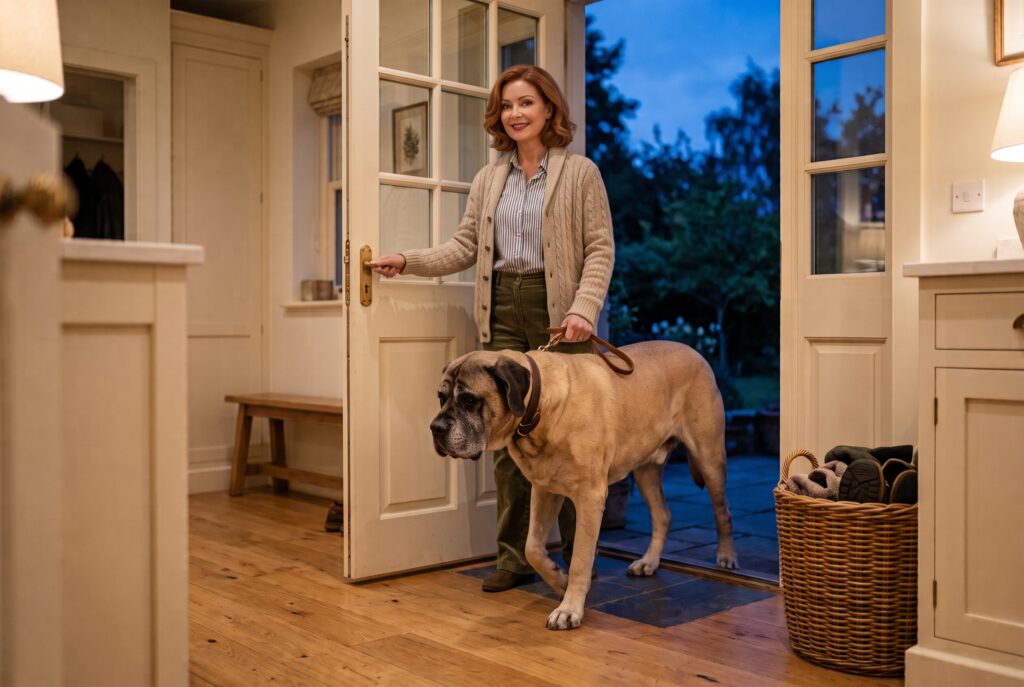
While you and your vet sort out the cause, your job at home is simple: keep your dog dry, keep the skin healthy, and protect both your dog’s dignity and your floors. This is where the right setup earns its keep.
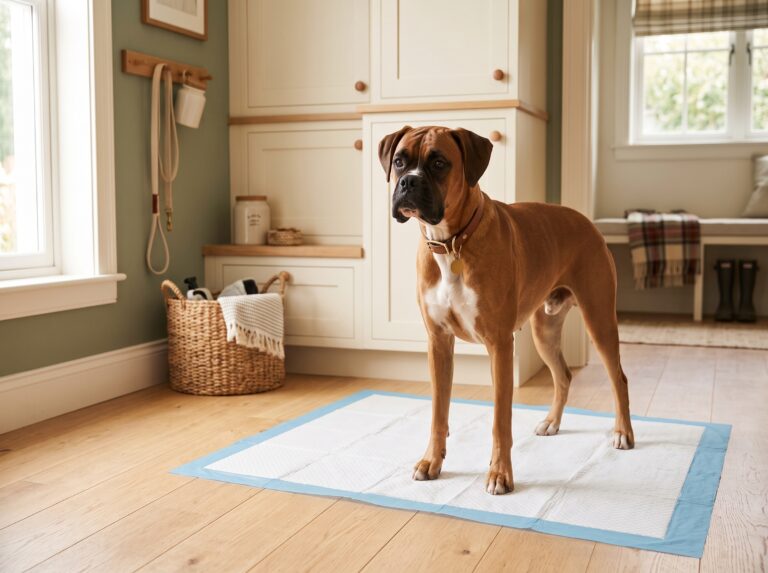
- Use a properly sized, absorbent pad overnight. A big senior dog produces several cups of urine a day, and a single full-bladder accident from a giant breed can be a cup or two on its own, more than enough to overrun a small pad and soak into the bed. Match the pad to the dog: find your dog’s size, then use the XL, XXL, or XXXL pad that actually fits.
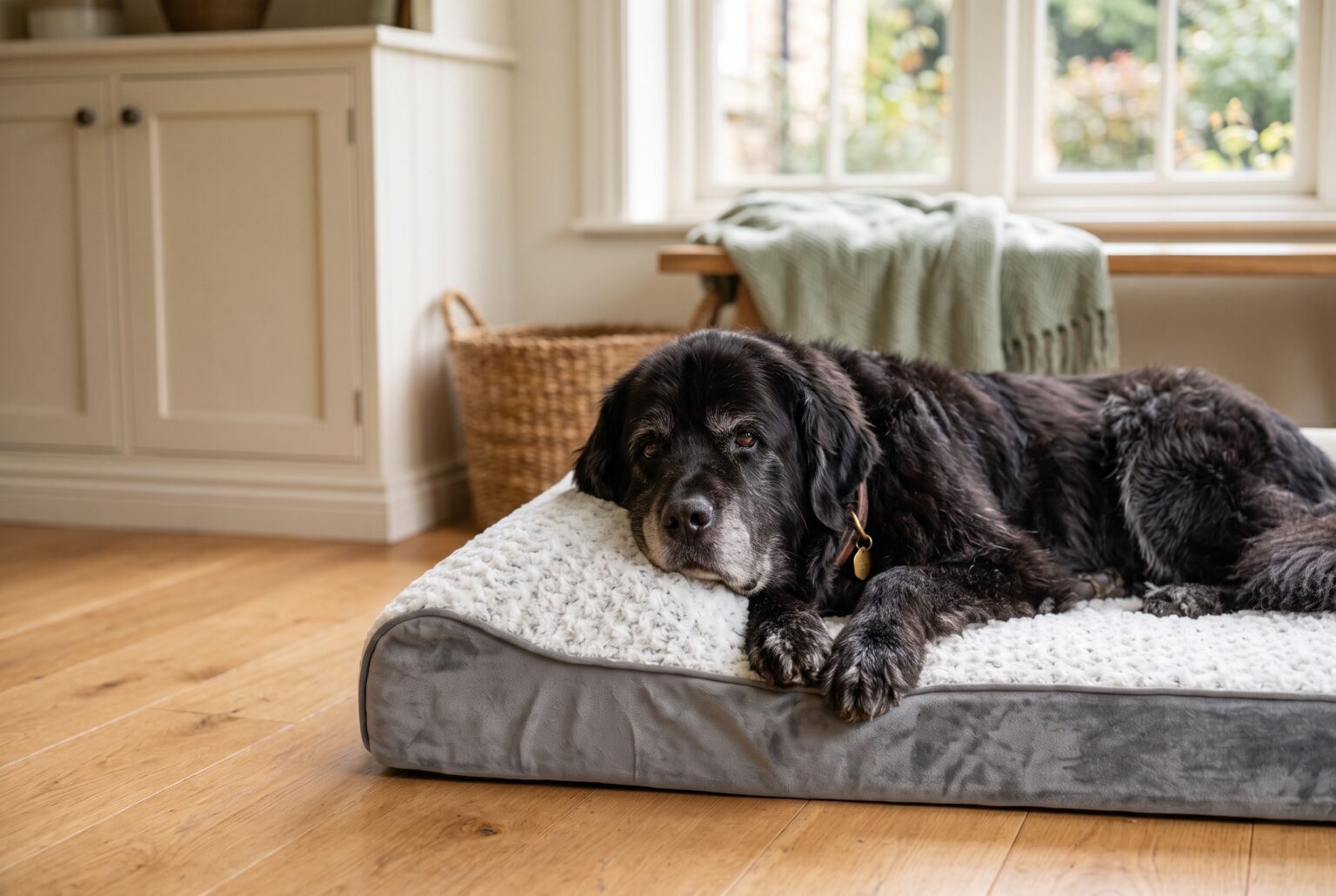
- Make the bed waterproof and washable. A supportive orthopedic bed with a waterproof cover keeps overnight leaks off the floor and out of the foam, and washable bedding means a clean, dry spot every night.
- Protect the skin. Urine left on the skin causes a painful rash called urine scald. Gently clean and dry any soiled fur, keep the area trimmed, and check it daily. If the skin looks red or raw, ask your vet.
- Add a late last-call, and more trips. One more potty trip right before bed, plus an earlier one in the morning, shrinks the overnight window. For an arthritic dog, a ramp and some traction runners can be the difference between making it out and not.
- Consider a safe, contained space. For an unsteady senior, a roomy 54-inch crate with a waterproof pad and soft bedding keeps your dog safe at night and contains any accident to one washable spot.
- Keep the routine steady, and never restrict water on your own. A predictable schedule helps. Cutting back water to stop leaks is dangerous, especially with kidney disease or diabetes, so only adjust water with your vet’s guidance.
Red flags: when an accident is an emergency
Most senior leaking is a slow change you can raise at your next appointment. A few signs, though, mean call right now, not next week:
- Your dog is straining to urinate but little or nothing comes out, or cannot urinate at all. A blocked bladder is a true emergency and can become life-threatening within a day.
- Blood in the urine, or crying out while trying to go.
- Sudden, deep lethargy, vomiting, or refusing food alongside the urinary changes.
- A previously reliable dog who suddenly starts having accidents. A sudden change deserves a prompt visit to rule out infection or metabolic disease.
This article is general information and is not a substitute for veterinary care. If your dog cannot urinate, is straining, has bloody urine, or suddenly seems very unwell, contact your veterinarian or an emergency clinic right away.
Aging with dignity
A senior dog who has accidents is the same dog who met you at the door for all those years. Your dog is not being difficult, and not done. They just need a little more help now, the way we all will one day. Get the right diagnosis, follow your vet’s plan, and set up a clean, dry, comfortable place to rest, and most dogs go on enjoying their golden years in real comfort.
If you are putting that setup together, start with the pad that fits and a bed that supports old joints. Find your dog’s pad size, see our oversized pee pads built for big and giant dogs, or browse the orthopedic bed made for senior bodies. And if the nights are about more than leaks, our guide to reading your dog’s potty signals and our honest cleanup guide can both help.