You cleaned it up. You scrubbed, you sprayed, the spot looked fine. Then a warm, humid day rolls in, and the whole room smells like dog again. If you own a big dog, you know this one, because a big dog leaves a big puddle, and the bigger the puddle, the deeper it soaks.
Here’s the honest version of how to get dog-pee smell out of carpet and hardwood for good: what actually works, what’s a waste of time, and the popular “rules” that are really just folk wisdom.
New here? This article is part of our complete guide to big-dog potty training.
Why dog pee is so hard to get rid of
Fresh dog urine is about 95% water. The trouble is the other 5%. As it sits, bacteria break the urea in urine down into ammonia, that sharp, eye-watering smell, and the spot shifts from mildly acidic to alkaline. It also leaves behind uric-acid salts that barely dissolve in water. Plain mopping lifts the easy stuff and leaves those salts behind.
That’s why the smell “comes back.” Cleaning pros report those dried salts are hygroscopic: they pull moisture out of humid air and re-release odor, so the floor smells fine in January and like a kennel in July. One thing to ignore from the internet: dog pee is not “mostly uric acid.” That’s borrowed from cat-urine marketing. Dogs, like us, get rid of nitrogen mainly as urea; the uric salts add to the lingering smell, but they aren’t the whole story.
First: act fast and blot
On a fresh accident, speed beats any product. The Humane Society recommends layering paper towels over (and, if you can, under) the spot and pressing, even standing on a thick wad, to pull the urine up before it reaches the padding or soaks into the boards. Blot; don’t rub. Rubbing just drives it deeper and frays the carpet fibers.
For a fresh spot, a quick rinse with cool water and a little dish soap, blotted dry, gets you most of the way there. Save the heavy artillery, the enzyme cleaner, for the odor that’s left.
Getting dog pee out of carpet, step by step
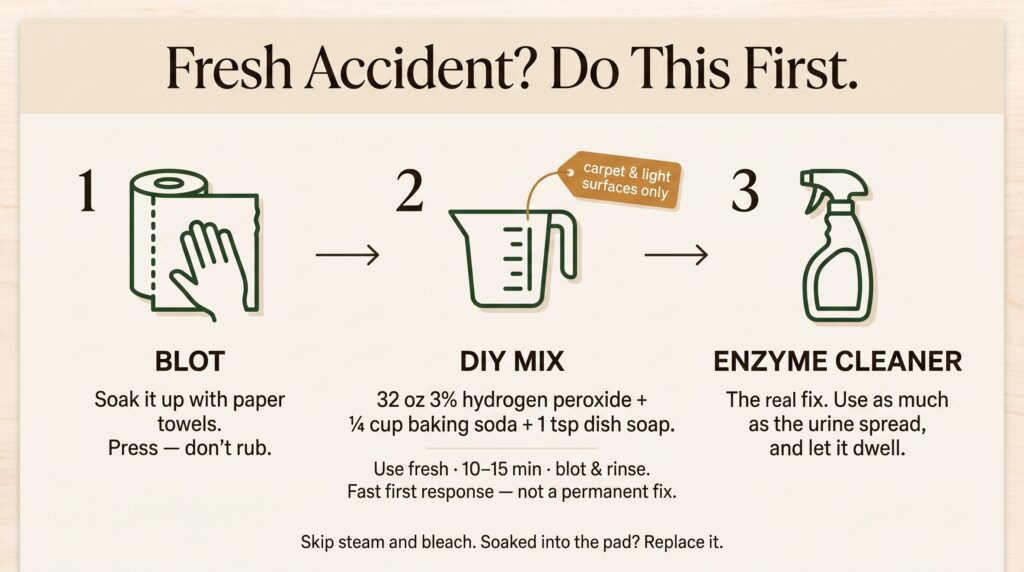
1. Blot and extract
Soak up everything you can first. The Carpet and Rug Institute recommends blotting with lukewarm water and a touch of mild detergent, not scrubbing, because urine usually spreads wider and deeper than the stain you can see.
A quick DIY mix for fresh accidents (light surfaces only)
No enzyme cleaner on hand and you caught it fresh? A simple oxidizing mix will lift the stain and knock down the immediate smell, and you probably already have everything:
- 1 quart (32 oz) 3% hydrogen peroxide, the brown-bottle drugstore kind
- ¼ cup baking soda
- 1 teaspoon liquid dish soap
Mix it in an open container and use it right away while it’s still fizzing. Work it gently into the spot, let it sit 10–15 minutes, then blot and rinse with clean water.
Here’s the honest part: hydrogen peroxide is an oxidizer: it breaks apart the visible stain and cuts the surface smell fast, but it does not break down the uric-acid salts that make pee odor creep back days later (lab testing confirms peroxide doesn’t oxidize uric acid). Treat it as a fast first response for fresh, surface-level messes, not a cure for a soaked-in or old stain. Anything that’s reached the carpet pad or subfloor (the big-dog reality) still needs an enzyme cleaner, or pulling up the pad.
Three warnings, because we’d rather you not learn them the hard way:
- Peroxide bleaches. It can lighten carpet dye and wood finish. Test a hidden spot first, and skip it on dark carpet or unsealed/oiled wood. (It’ll even turn a black dog’s coat bronze; it’s not gentle on color.)
- Mix it fresh; never seal it in a closed bottle. The reaction keeps releasing oxygen, and a capped container can rupture. Make what you need, use it, toss the rest.
- Never combine it with vinegar in the same mix.
2. Use an enzyme cleaner: the real fix
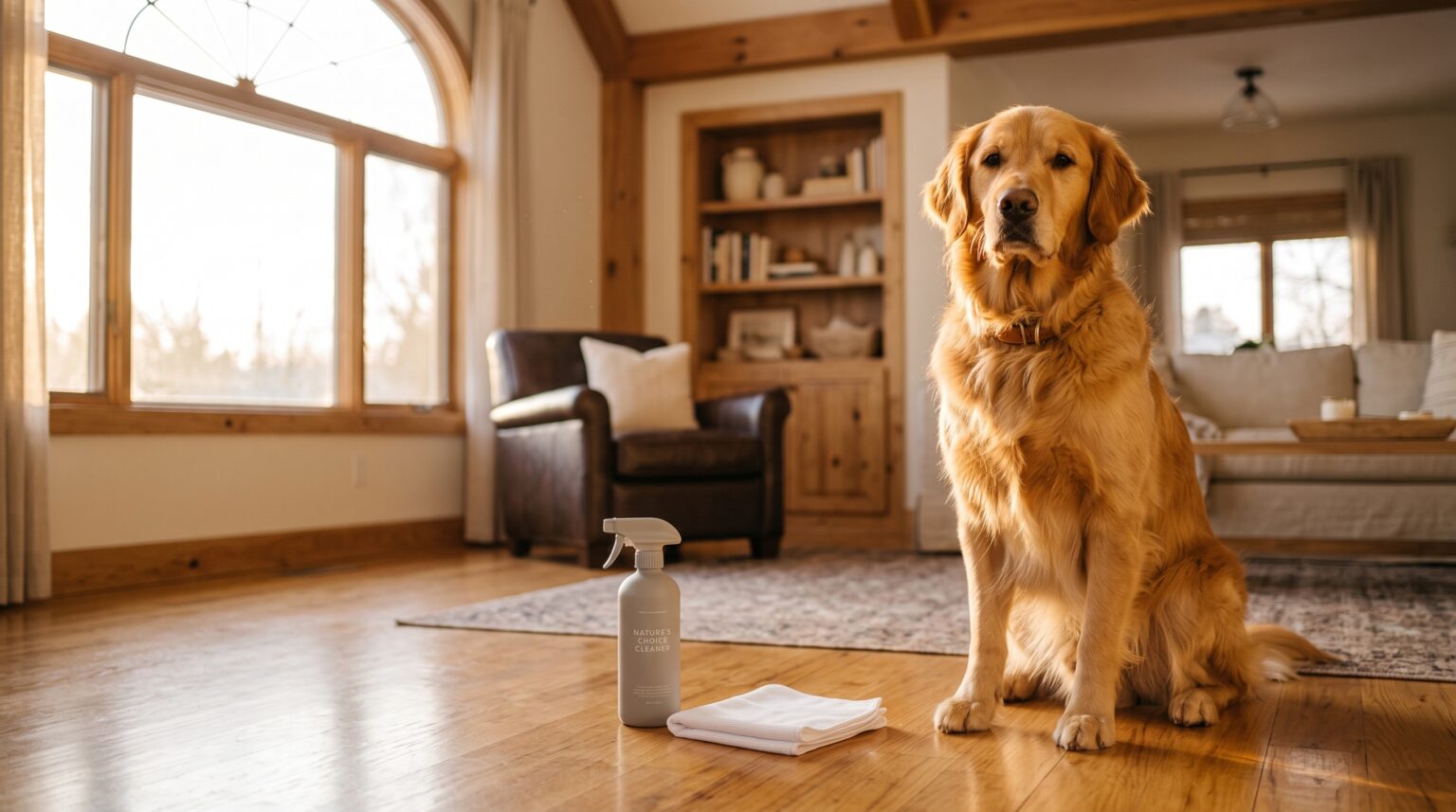
This is the step that actually ends the smell. Enzymatic cleaners use proteases, ureases, and uricase to digest the urea and uric-acid salts that water leaves behind. Two rules: match the volume, use at least as much cleaner as there was urine, so it reaches everywhere the pee went, and respect the dwell time, anywhere from ten minutes for a fresh spot to 24–48 hours for an old one. Let it air-dry slowly; don’t blast it with heat. Nature’s Miracle, Simple Solution, and Rocco & Roxie are all easy to find at most pet stores.
3. Know when to call a pro
If urine reaches the pad or subfloor, two things happen: the odor can wick back up to the surface days later as it dries, and moisture can weaken the carpet backing (the CRI calls this delamination). A deeply soaked pad usually has to be replaced. No surface spray fixes a saturated pad.
"Vinegar and baking soda buy you a fresher-smelling afternoon. An enzyme cleaner is what actually ends it."
Hardwood: odor, and those black stains
Sealed vs. worn finish
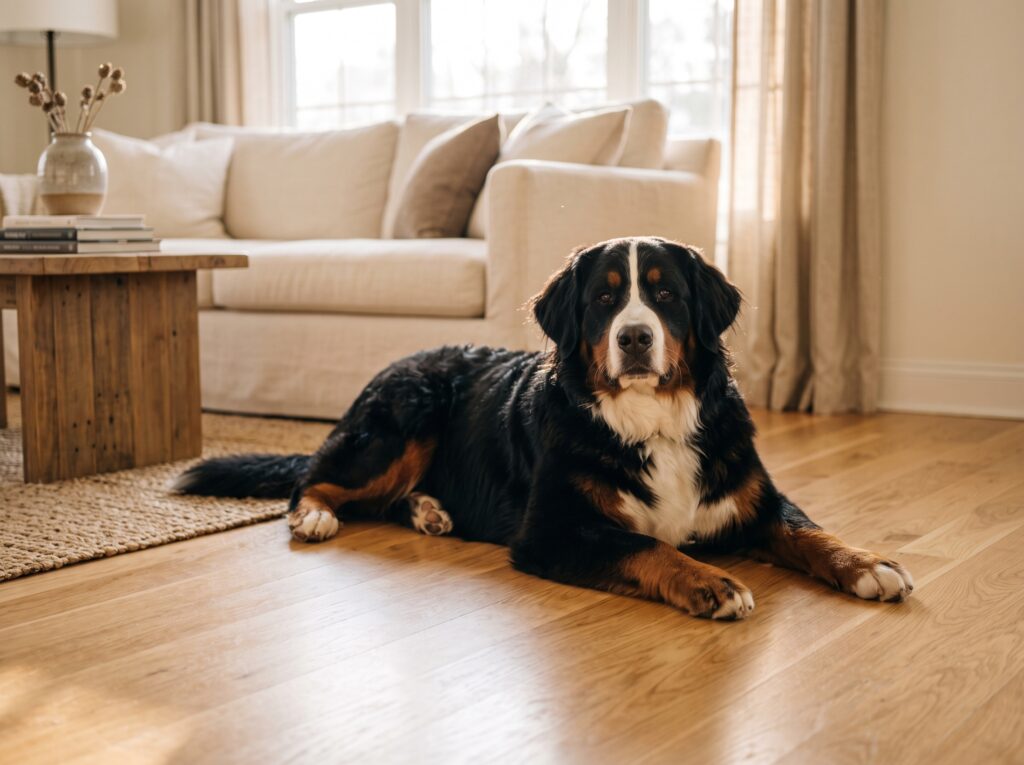
If your floor has an intact modern finish, the urine sat on top. Wipe it up, clean with a pH-neutral wood cleaner (Bona, for one, makes a pH-neutral formula), and you’re usually fine. Where the finish is worn, scratched, or old, urine seeps into the wood itself, and that’s where odor and stains set in. Don’t soak the boards or let water stand in the seams.
Those black stains
Dark gray-to-black marks on oak aren’t dirt, and they usually won’t sand out. They’re an iron-tannate reaction, the moisture and trace minerals in urine reacting with the natural tannins in oak and walnut (the same stain a wet iron nail leaves on oak). Your real options: treat the spot with oxalic acid (“wood bleach”), then neutralize and refinish, or, if it’s gone deep, replace the board. A full refinish follows the National Wood Flooring Association grit sequence, but for one or two black spots, spot-treating with oxalic acid is the place to start.
Myths that quietly make it worse
- “Steam cleaning sets it forever.”
- Overstated. Heat can drive moisture deeper and bake in odor before the residue is broken down, but it doesn’t “cook proteins” (urine is ~95% water). Skip DIY steam on untreated urine.
- “Vinegar removes it for good.”
- A fine, cheap first step for fresh spots, but it doesn’t destroy uric-acid salts. Use it early; finish with an enzyme cleaner.
- “Bleach cleans pee.”
- It disinfects; it doesn’t remove odor. And bleach plus urine’s ammonia can release irritating chloramine gas. Don’t use it for cleanup.
- “Sanding removes black stains.”
- Usually not. Deep iron-tannate stains need oxalic acid or board replacement, not just sanding.
- “Peroxide and baking soda fix it for good.”
- They lift the stain and cut the surface smell, but they don’t permanently kill the odor, peroxide doesn’t break down uric-acid salts. See the DIY box above for what it does and doesn’t do.
Sometimes the smell is medical
If a previously reliable dog suddenly starts having accidents, or you find damp spots where they sleep, treat it as a health question first, not a discipline one. Sudden indoor accidents can signal a urinary tract infection, incontinence, or other issues, especially in senior and large-breed dogs.
Per VCA Animal Hospitals, urinary incontinence is common in big dogs as they age. No amount of enzyme cleaner fixes a medical cause. If accidents are new or frequent, talk to your veterinarian.
Preventing the next one
The best odor fix is fewer accidents. A few things that genuinely help:
Clean it right the first time. Dogs return to spots that still smell like a bathroom, to them. A full enzyme treatment removes the scent marker that invites a repeat. (Skip ammonia-based cleaners entirely; ammonia smells like urine to a dog.)
Confine during retraining. The Humane Society recommends crating or close confinement (if your dog is crate-trained) while you rebuild the habit; it heads off the unsupervised accidents that keep the cycle going. For big and giant breeds, that means a crate they can actually stand up and turn around in.
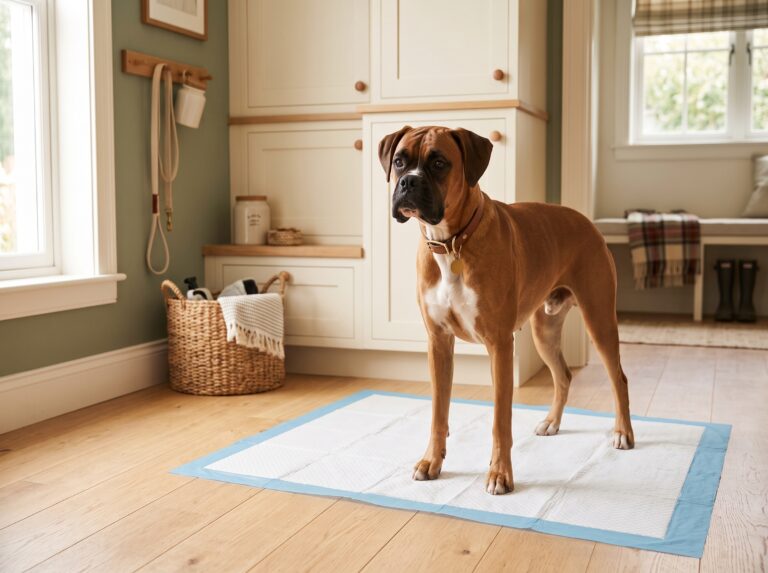
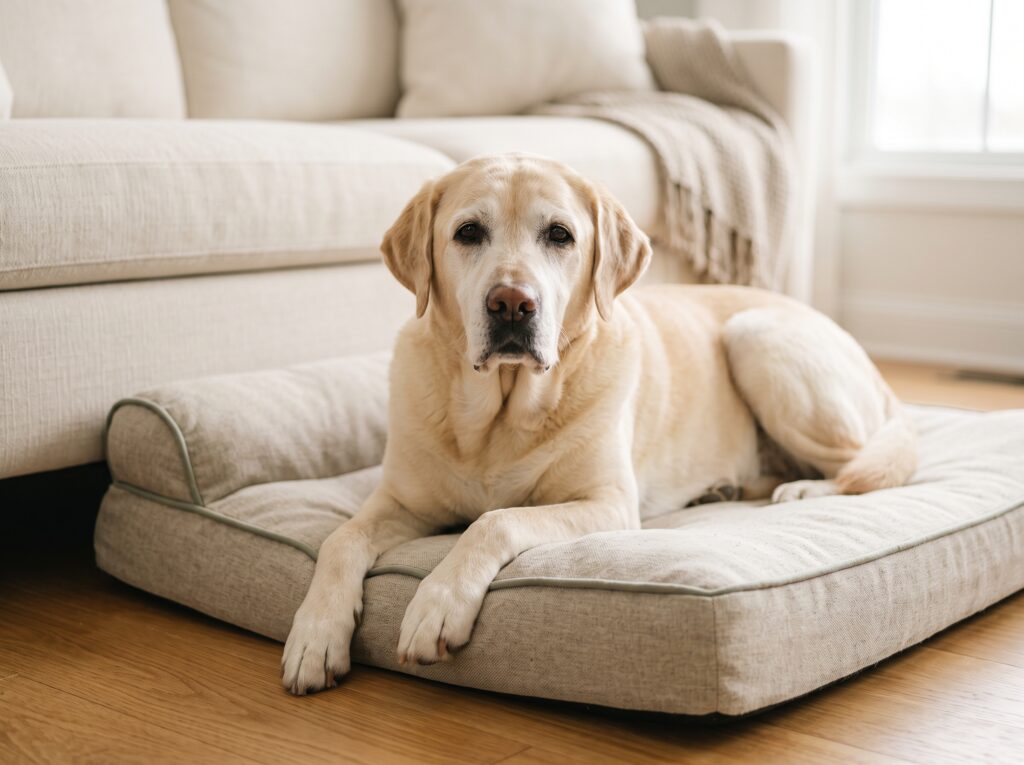
Make cleanup easy. Washable bedding and a properly sized pee pad save your floors, especially for puppies, seniors, or a dog recovering from surgery. Big dog, big puddle: an undersized pad just relocates the mess to your floor. Not sure what size fits your dog? Find your pad →
The short version
Blot fast, extract what you can, and let an enzyme cleaner do the real work. It’s the only thing that breaks down what plain water leaves behind. Skip the steam and the bleach, treat vinegar as a first step and not the finish, and for black stains on hardwood reach for oxalic acid before the sander. Do that, and the smell goes away and stays away, humid days included.
For more hands-on tips, the crowds at r/CleaningTips and r/puppy101 are practical and friendly. And if you’re still chasing accidents from a big or senior dog, start with the right setup. See our oversized pee pads →